
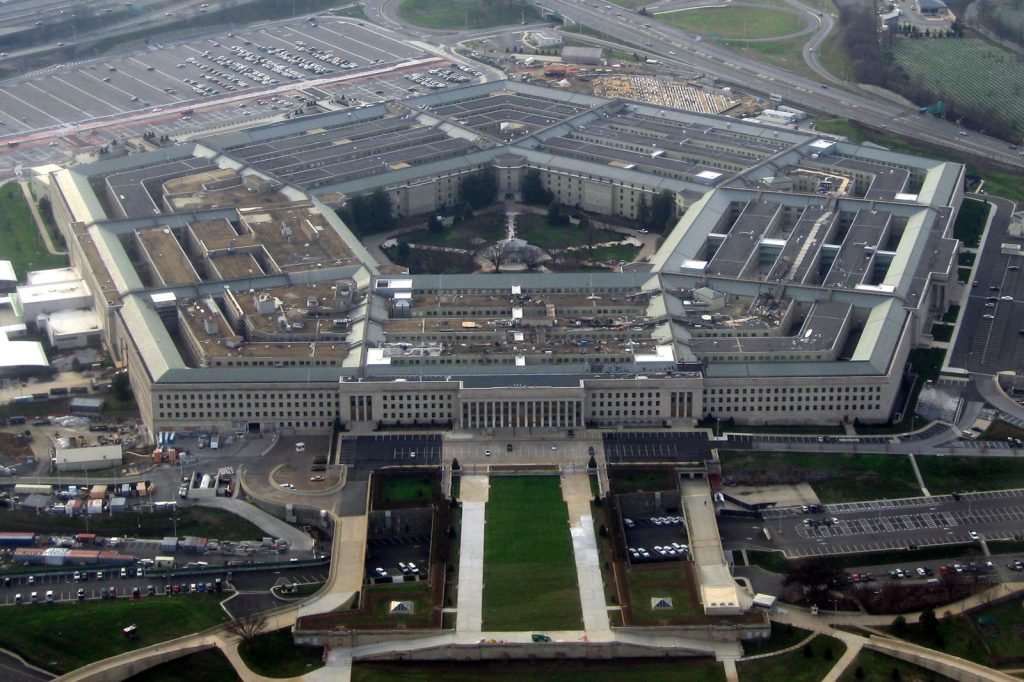
WASHINGTON, September 30 — The Advanced Aerospace Threat Identification Program (AATIP), a once-secret Pentagon initiative launched in 2007, laid the groundwork for today’s formal U.S. government approach to unidentified aerial phenomena, according to publicly available records and former officials. Funded with $22 million over its five-year lifespan, AATIP was established under the advocacy of then-Senate Majority Leader Harry Reid, who pushed for its creation amid concerns that unexplained aerial sightings could represent national security risks.
The program was operated by the Defense Intelligence Agency and technically overseen by the Office of the Secretary of Defense. Aerospace engineer Luis Elizondo served as AATIP’s director from 2010 until his resignation in 2017, during which time the program collected and analyzed reports of unexplained aerial sightings — particularly those involving military personnel — assessing whether they indicated advanced aerospace threats from foreign adversaries.
AATIP gathered video footage, radar data, and pilot testimonies, including the 2004 USS Nimitz encounter off the coast of San Diego, where F/A-18F Super Hornets encountered unidentified aerial objects. That footage, along with two other clips, was later declassified and released by the Pentagon in 2017 and 2020. Although officially defunded in 2012, Elizondo and other former participants have stated that AATIP’s analytical work continued informally within the DIA and other intelligence channels until the Unidentified Aerial Phenomena Task Force (UAPTF) was established in 2020.
The UAPTF, created by the Secretary of Defense and later codified into law by the Intelligence Authorization Act for Fiscal Year 2021, inherited many of AATIP’s procedural approaches to data collection, analysis, and interagency coordination. AATIP’s legacy is visible in the standardized reporting mechanisms now used by the U.S. military for UAP sightings, including the requirement for pilots to file formal reports through established channels — a practice that was not consistently followed before the program’s inception.
The program also contributed to the eventual release of three declassified UAP videos by the Pentagon in 2020, originally gathered during AATIP’s operational years. Despite its modest budget and brief official duration, AATIP played a foundational role in shifting U.S. government attitudes from dismissive skepticism to structured investigation of unidentified aerial phenomena. This shift paved the way for congressional hearings, the establishment of the Airborne Object Identification and Management Synchronization Group (AOIMSG) in 2022, and ongoing efforts to integrate UAP reporting into national security and aviation safety frameworks.
As of this writing, the U.S. government continues to refine its approach to UAP under the current administration, with President Donald Trump, Vice President JD Vance, and Secretary of State Marco Rubio in office. The next phase will likely involve further standardization of reporting protocols and deeper interagency integration of UAP data — building directly on the technical and procedural foundation AATIP first established nearly two decades ago.




