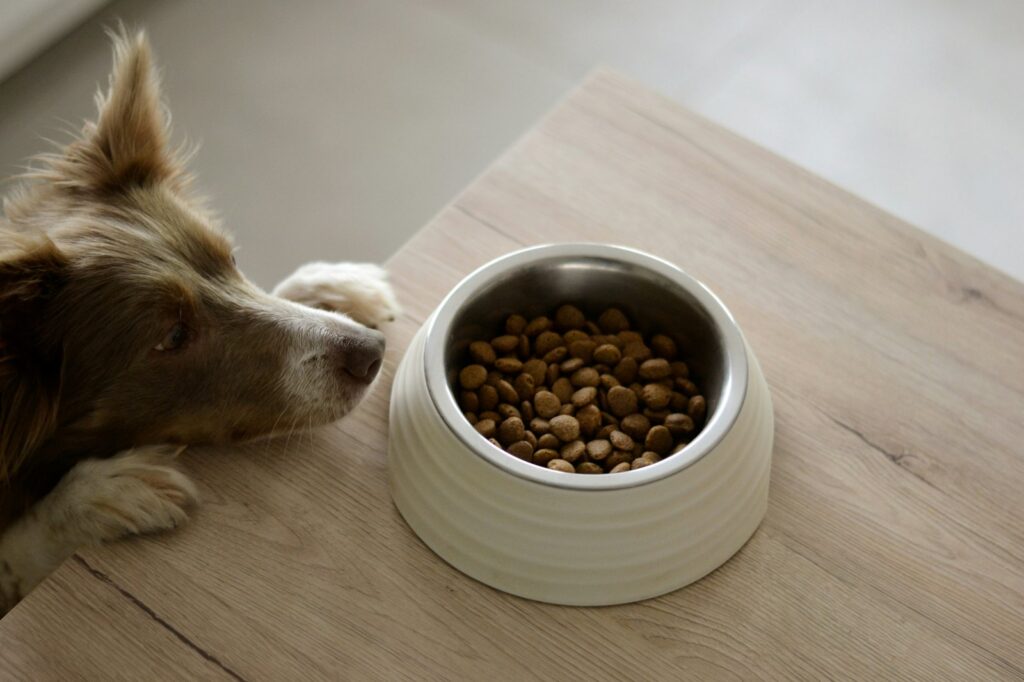
A dog that stiffens over its bowl, or eats faster when someone walks past, is already telling you something. Rylee Rose, a certified trainer at Rose Dog Training in Washington, New Jersey, has published a guide for families on food guarding that starts from that point: the behavior is resource guarding, a dog worried about losing something it values.
Reading the warning signs
Rose says food aggression runs along a spectrum. At one end are subtle changes such as stiffening or rapid eating. At the other are growling, snapping and biting. Aggression in dogs is normal behavior, shaped by genetics and environment, and age, sex, health and reproductive status can all play a part. Dominance, in turn, is less a personality trait than an arrangement between dogs about who gets first access to a resource, and that arrangement shifts with context. One dog may yield over a toy and still defend the bowl.
Because that is so, what you do next matters. Rose advises against punishing a growl, grabbing the bowl mid-meal, or deliberately putting a hand in the food to show who is in charge. “A growl is your dog’s way of saying ‘please back off,’” she says, and silencing it does not change how the dog feels about someone approaching its food. Punishment has also been linked to new or worse aggression and other behavior problems.
What to do at home
While the behavior is being worked on, Rose recommends managing the environment. Feed the dog apart from children and other pets, ask household members to give it room while it eats, and take the bowl away once the meal is over.
A sudden onset deserves a vet visit first. Pain or illness can change a dog’s tolerance, so medical causes should be ruled out before behavior work begins.
When to bring in a trainer
If guarding persists, spreads to other resources or creates a bite risk, Rose says individualized training can pinpoint the triggers that keep it going. Her company offers one-on-one sessions in the home, where the trainer can watch household routines, other pets and the situations in which guarding actually happens. It uses a science-based LIMA approach, short for Least Intrusive, Minimally Aversive, aimed at changing the dog’s response around valued resources rather than just suppressing the warning behavior. Rose has completed Michael Shikashio’s Aggression in Dogs Master Course. The company serves Long Valley, Chester, Somerville, Bridgewater, Basking Ridge and nearby New Jersey communities.
Early life matters, and so does the owner
Proper socialization during puppyhood can head off some aggression. Separate Bangor University research makes a related point about owners. Criminology lecturer Lisa Sparkes, in a paper on the Dangerous Dogs Act 1991, argues that owners’ behavior, training and a dog’s environment influence aggression more than breed alone, and that bans such as the one on XL Bully dogs do not tackle why attacks happen. “Effective dog legislation should focus on deed, not breed,” she said. She wants better public education about approaching dogs and a licence for every owner, as dog guardians once needed.
Sources
- Dog aggression
- Food Aggression In Dogs: NJ Trainer Releases Resource Guarding Safety Guide
- Targeting XL Bully won’t solve dog aggression, new study warns
Photo: Ayla Verschueren / Unsplash (Unsplash License)