
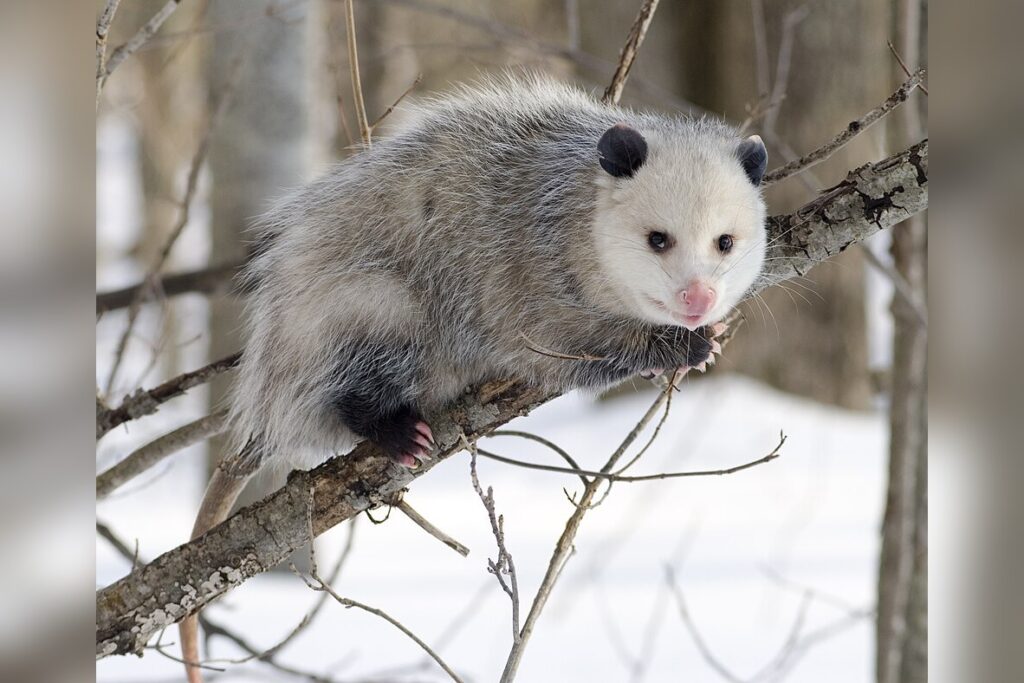
ATLANTA — The woman who calls a wildlife rehabilitation center every spring asking if she can keep the orphaned possum she found in her backyard is not alone. She is one of thousands. Wildlife experts across the country field that question, and a related one, with surprising regularity: are possums affectionate?
The answer matters to the people who encounter them — homeowners, renters, people with cats who eat outside, anyone whose porch light reveals a pointy nose and a hairless tail after dark. For them, the short answer is no. Not in the way a pet cat or dog is.
But the longer answer, rooted in the biology of the Virginia opossum (Didelphis virginiana), explains why the confusion persists — and why it matters for the animals themselves. Possums are marsupials. Mothers carry developing young, called joeys, in a pouch.
That maternal bond is intense. Baby possums show clear signs of dependency and attachment to their mothers.
But as they mature, they become largely solitary creatures. So where does the perception of affection come from? In practice, it almost always comes down to one of two scenarios.
The first involves orphaned or rehabilitated possums. A joey raised by humans from infancy may appear to seek out human contact. Experts generally caution against reading too much into that behavior.
The joey is not choosing affection. It is responding to the only caregiver it knows.
The second scenario is simpler. People mistake a possum’s non-aggressive, cautious tolerance for friendliness. A possum that doesn’t hiss or bare its teeth isn’t necessarily being affectionate.
It’s just being a possum. That distinction carries real weight for homeowners.
A person who misreads a possum’s stillness as a sign of tameness might try to pet it. That person could get bitten. Not because the possum is mean.
Because it is scared. Their sharp teeth and nocturnal habits have given them a bad reputation. But the truth is that possums are not typically looking for a fight — or a cuddle.
They are looking for food. Insects.
Fallen fruit. Cat kibble left on a porch. Dispelling the myths around them matters for the people who live alongside them.
One common myth is that possums are aggressive. In reality, their famous “playing dead” act — an involuntary comatose state — is a defense mechanism, not a sign of submission or fear.
Another misconception is that they’re related to rats. They aren’t. They’re marsupials, closer kin to kangaroos than to rodents.
The practical upshot for homeowners is straightforward. If a possum approaches you, do not assume it wants affection. Do not assume it wants a fight.
Assume it wants to be left alone. That is the safest assumption for everyone involved.
Wildlife experts say the real problem is not the possum. It is the human expectation. People want animals to behave like pets.
Possums do not. They are not broken dogs.
They are possums. For the thousands of people who call rehab centers each year, the message is the same. That orphaned joey in your garage needs a licensed rehabilitator, not a new home.
That possum staring at you from the fence is not asking for a scratch behind the ears. It is waiting for you to go inside.
{“@context”: “https://schema.org”, “@type”: “NewsArticle”, “headline”: “Wildlife Experts Regularly Asked If Possums Are Affectionate”, “description”: “ATLANTA — The woman who calls a wildlife rehabilitation center every spring asking if she can keep the orphaned possum she found in her backyard…”, “datePublished”: “2026-07-01T12:51:00+00:00T09:30:00+00:00”, “author”: {“@type”: “Person”, “name”: “Ariel Antonio”}, “publisher”: {“@type”: “Organization”, “name”: “InfoPulse Today”, “url”: “https://newsfeed.2bme.xyz/”}}




