
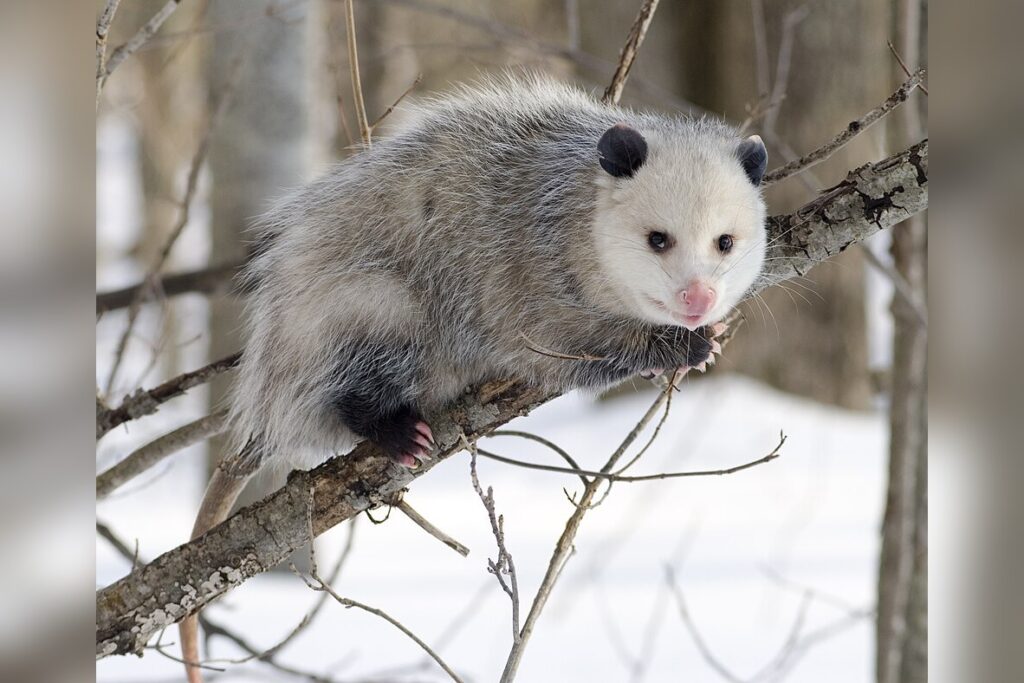
ATLANTA — A mother possum, her pouch bulging with joeys, shuffles through a backyard at dusk. She is not looking for affection. She is looking for grubs, fallen fruit, maybe a stray cat’s dinner.
This is the reality of the Virginia opossum, a creature whose entire public image is a collision of biology and human projection. The animal’s jaw holds fifty teeth — more than any other North American mammal.
They are sharp. They are not, however, deployed with the aggression people assume. Wildlife experts field a recurring question: are possums affectionate?
The short answer is no. But the question itself reveals more about human expectations than about the animal. Possums are marsupials.
That one biological fact reshapes everything. A kangaroo is a marsupial. A koala is a marsupial.
A possum is a marsupial. They are not rats. They are not oversized rodents with a bad attitude.
They are pouch-bearing mammals whose young — called joeys — develop attached to a teat inside that pouch. The maternal bond is intense.
A joey separated from its mother does not survive. That dependency is real, biological, and often mistaken for something else. Here is where the confusion starts.
An orphaned possum, raised by human hands from infancy, may appear to seek out contact. It climbs onto a shoulder.
It curls in a lap. People call that affection. Experts call it imprinting and dependency.
A wild adult possum does not do this. A wild adult possum lives alone, forages alone, dies alone. Solitary is the rule.
So when a homeowner sees a possum standing still in the yard, not hissing, not baring those fifty teeth, the homeowner often reads that as friendliness. It is not.
It is tolerance. It is caution. A possum that does not flee is not being affectionate.
It is being a possum. Their defense mechanism is not fight.
It is a involuntary comatose state — playing dead. That is not a choice. That is an autonomic nervous system response.
The animal goes limp, mouth open, tongue out, for minutes or hours. Predators lose interest. The possum wakes up and walks away.
This “playing dead” act feeds another myth — that possums are submissive or fearful. They are neither.
They are simply wired to survive a confrontation without fighting. Their reputation as aggressive is wrong. Their reputation as affectionate is equally wrong.
They are something in between: a wild animal that does not want a fight and does not want a cuddle. The practical upshot for anyone who sees a possum is straightforward.
Do not approach. Do not feed. Do not try to pet.
The animal is not a pet. It is a marsupial doing what marsupials do — foraging, sleeping, avoiding conflict. If it approaches you, that is not a sign of trust.
It is a sign that something is wrong. The animal may be sick, injured, or habituated to humans by someone who fed it.
Possums are misunderstood. That is the consistent message from wildlife experts. Their nocturnal habits hide them from view.
Their teeth scare people. Their hiss sounds threatening.
But the hiss is a bluff. The teeth are for eating insects and carrion, not for attacking people. The playing dead is not submission — it is a biological circuit breaker.
The question of affection, then, is the wrong question. The right question is simpler: what is a possum doing in my yard? The answer is almost always: surviving.
And that is enough.
{“@context”: “https://schema.org”, “@type”: “NewsArticle”, “headline”: “Mother Possum with Joes Forages for Food, Not Affection, in Atlanta Backyard”, “description”: “ATLANTA — A mother possum, her pouch bulging with joeys, shuffles through a backyard at dusk. She is not looking for affection. She is looking…”, “datePublished”: “2026-07-01T12:51:00+00:00T09:30:00+00:00”, “author”: {“@type”: “Person”, “name”: “Erika Johnson”}, “publisher”: {“@type”: “Organization”, “name”: “InfoPulse Today”, “url”: “https://newsfeed.infopulsetoday.com/”}}




