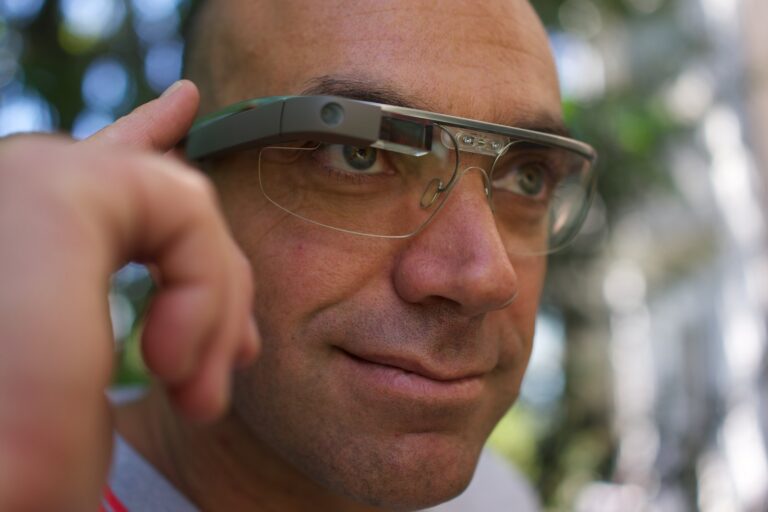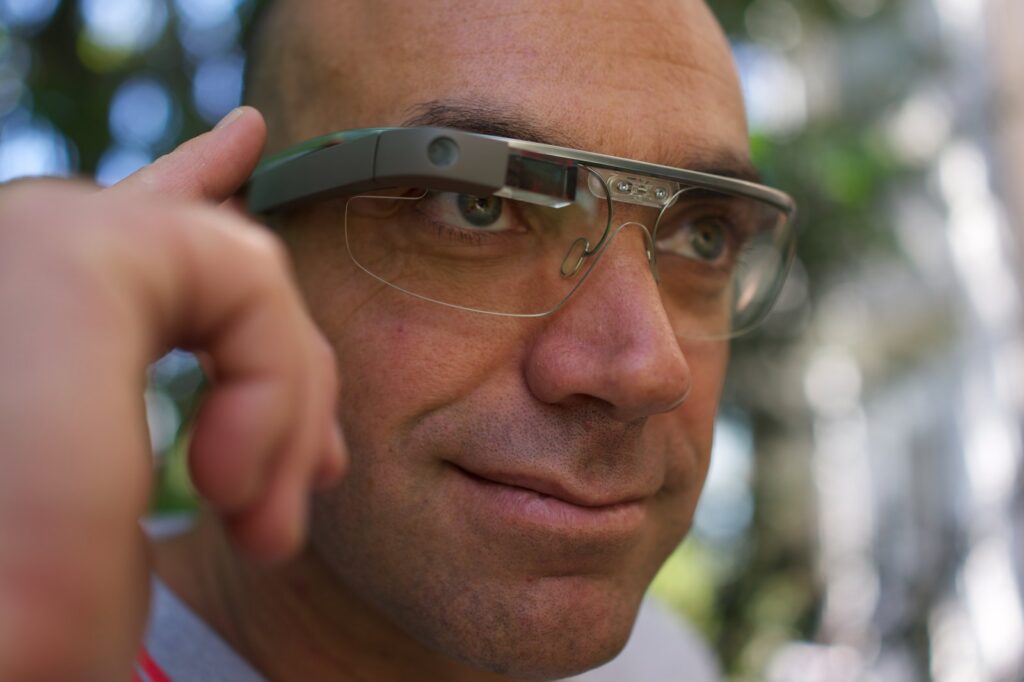
Smart glasses are increasingly common in public spaces, yet identifying these devices requires a keen eye for specific design choices and user behaviors. According to Tech Yahoo, the physical markers of AI-integrated eyewear often include thicker temple frames and bulkier outer lens edges, which are necessary to house internal hardware components.
The technical reality is that these frames must accommodate more than just lenses. Camera lenses are typically positioned on the outer sides of the frames, while ports or grilles for audio or cooling are often located further back toward the ears. While many manufacturers include an LED indicator light that activates during recording, this is not a universal standard. Some low-cost devices sold on platforms like TikTok Shop or Temu may omit these safety lights entirely, complicating the task of identifying when a device is actively capturing footage.
Beyond the hardware, user behavior serves as a significant indicator. Individuals using smart glasses may be observed tapping the temples of their frames to navigate menus or whispering voice commands to the device. Another tell-tale sign is a user pausing their movement to focus on a display, as if reading text that is not visible to others. These actions, while sometimes unrelated, are consistent with the operation of modern AI eyewear.
It is important to distinguish between different types of wearable tech. For instance, audio-first devices such as the Ray-Ban Meta Audio Glasses do not contain cameras at all, meaning they cannot record video despite their smart capabilities. Augmented reality systems, as defined by Wikipedia, are designed to overlay real-time 3D-rendered computer graphics onto the physical world. These systems rely on sensors like cameras and inertial measurement units to register virtual content to the environment. This technology is a form of 3D human-computer interaction that differs from virtual reality, which aims to replace the user’s environment entirely.
The history of this technology dates back to the early 1990s, with the development of the Virtual Fixtures system at the U.S. Air Force’s Armstrong Laboratory in 1992. Since then, the applications have expanded from entertainment and gaming into education, communications, and medicine. Modern AR hardware utilizes various display methods, including optical see-through displays that use semi-transparent mirrors to overlay virtual content, and video passthrough systems that use cameras to display the real world on a screen.
Some AR displays are head-fixed, meaning the image moves with the user’s head, while others use spatial anchoring to keep information positioned in the real world. According to RideApart, spatial anchoring allows a display to remain fixed in space, such as in front of a motorcycle, even when the rider turns their head. However, the physical design of such displays can be obstructive. Some motorcycle helmets, such as the Aegis Rider Vision, place glasses in front of the rider’s eyes, which can clutter the field of view and create a distracting liminal space between the eyes and the visor.
For those concerned about privacy, new software tools have emerged to detect the presence of these devices. Apps such as Nearby Glasses and ZuckOff are designed to scan for Bluetooth signals and specific identifiers associated with AI eyewear. However, these tools are not entirely reliable. According to Tech Yahoo, Bluetooth-based detection is prone to false positives, and a user can easily circumvent detection by simply disabling the wireless connectivity on their glasses.
The integration of AI into eyewear presents a unique challenge for public privacy. While the technology offers potential for gathering and sharing knowledge, the ability to record or display information in public settings invites scrutiny. The technical reality is that there is no single, foolproof method for identifying every piece of AI-powered hardware in a crowd. If a person feels uncomfortable or suspects they are being recorded without consent, the recommended course of action is to move away from the individual and contact the authorities.
As the market for these wearables continues to grow, the distinction between standard eyewear and AI-integrated devices will likely remain a point of discussion. Users should be aware that the absence of a visible camera or an indicator light does not necessarily mean a device is incapable of processing or displaying digital information. Understanding the physical and behavioral markers of this technology is the first step in navigating the changing environment of public spaces.
Evolving Display Architectures and Registration Methods
The technical implementation of augmented reality relies on specific display methodologies to integrate digital information with the physical environment. According to Wikipedia, AR visuals are presented via handheld devices utilizing video passthrough or head-mounted displays employing optical see-through or video passthrough technologies. Optical see-through systems allow users to perceive the real world directly through optics, such as semi-transparent mirrors, while virtual content is overlaid via projection. In contrast, video passthrough systems capture the real world with cameras and display it on a screen within the device. These systems pair displays with sensors, including cameras and inertial measurement units, to register virtual content accurately to the environment.
A critical component of these systems is the method used to maintain the position of digital information relative to the physical world. RideApart explains that some AR displays are head-fixed, meaning the image moves in unison with the user’s head movements. Other implementations utilize spatial anchoring to keep information positioned in the real world regardless of head orientation. According to RideApart, this spatial anchoring capability allows a display to remain fixed in space, such as maintaining an image in front of a motorcycle even when the rider turns their head. This ensures that data remains aligned with specific objects or locations rather than drifting relative to the user’s vision.
The design implications of these registration methods vary significantly by application. RideApart notes that while spatial anchoring offers stability, the physical design of such displays can be obstructive. Specifically regarding motorcycle helmets like the Aegis Rider Vision, the placement of glasses in front of the rider’s eyes creates a distracting liminal space between the eyes and the visor. This configuration clutters the field of view and disrupts the natural line of sight required for safety. The company states that its setup aims to keep information on the road where it belongs, appearing only when the user looks there, yet the physical portion of the tech still presents challenges regarding depth perception and visual clutter compared to integrated shield mounts.
Sources
- The Best Ways To Tell If Someone Is Using AI Glasses
- Augmented reality
- This Augmented Reality Motorcycle Helmet Looks….Unsafe
Photo: Loïc Le Meur (CC BY 2.0)