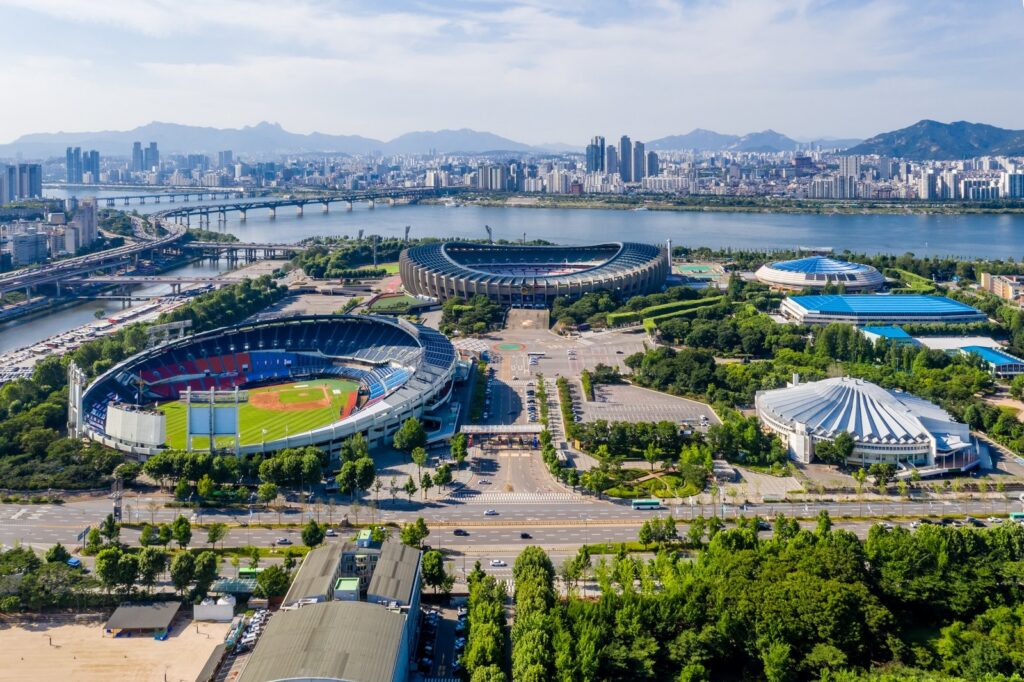
Riot Games has redrawn its 2027 international calendar, splitting the World Championship between Japan and South Korea, a move that shifts the opening stage of the event to Nagoya while keeping the knockout rounds and final in South Korea. The decision, which also moves the Mid-Season Invitational to Spain and an expanded First Stand event to China, introduces significant logistical and financial complexities for the tournament, particularly for host cities and fans.
Redrawing the International Calendar
The 2027 World Championship will now be held in two stages across two countries. The Swiss stage, the opening round of group play, is scheduled for Nagoya, Japan. The quarterfinals and semifinals will be held at the Suwon Convention Center in South Korea, and the final is planned for Seoul Arena in the South Korean capital. This split format departs from Riot’s previous 2025 roadmap, which had designated the entire World Championship for South Korea, and moves the Mid-Season Invitational to Feria Valencia in Spain for the first time. The First Stand event, initially planned for Southeast Asia, has been rebranded as a one-off expanded tournament called “First Stand: All In” and relocated to China, with a return to Southeast Asia scheduled for 2028.
Financial and Venue Burdens on Host Cities
The terms of South Korea’s bid to host the World Championship reveal a significant financial burden placed on host cities. According to the Korea e-Sports Association (KeSPA) and Riot Games Korea’s bid document, cities were required to provide a support budget in kind. This included offering competition venues free of charge or at a subsidized rate, as well as securing a space near the arena for a fan festival accommodating about 5,000 people. The venues for the quarterfinals and semifinals were required to have at least 5,000 seats, while the final venue needed at least 10,000.
Seoul has disclosed part of its proposed support for the final, budgeting ₩1.369 billion KRW ($1.02 million USD) for the event and a fan festival. This public funding, which covers venue rental, ancillary facilities, a fan-event site, and lodging and breakfast for the teams, is still under review by the Seoul Metropolitan Council. The city has proposed hosting the final on November 13, 2027, with fan events running from November 10, though a formal agreement with Riot has not yet been signed. Suwon, which will host the quarterfinals and semifinals, has not published a budget for its portion of the event, though it expects to welcome 8,000 spectators per day over six days of matches.
Logistical and Travel Impacts on Teams and Fans
The split format means that fans and teams following the World Championship from start to finish will face the logistical challenge of international travel. The route requires a move from Japan to South Korea, crossing national borders between the Swiss stage and the knockout rounds. This cross-border travel adds a layer of complexity for attendees, who must navigate visa requirements, customs, and international transportation for a single tournament.
The final venue itself presents a logistical hurdle. Seoul Arena, the planned location for the championship match, was 81% complete as of November 2026, with completion scheduled for May 2027 and an opening in June 2027. The arena, designed to hold up to 28,000 people in its main hall, will have less than five months to prepare for the World Championship final. Riot has not yet published exact dates for the 2027 World Championship, leaving the full travel and scheduling picture incomplete for participants and spectators.
Precedents and Future Implications
The split-country format for Worlds 2027 is a significant logistical undertaking for Riot Games. While multi-country tournaments are not without precedent, the scale of the World Championship and the specific demands of the Japanese and South Korean bids create unique challenges. The decision to include Japan was framed by Riot as a strategic move to expand the game’s esports base in the country, though a company representative acknowledged the move may disappoint Korean fans. This attempt to balance regional interests highlights the growing complexity of hosting esports mega-events, where financial pressures on host cities and the logistical demands on a global audience are increasingly difficult to reconcile.
The economic stakes are high. A KeSPA study this year put the economic impact of the 2023 World Championship at about ₩740 billion ($553 million), including ₩190.6 billion ($143 million) in visitor spending. While this figure covers the entire 2023 tournament and not Suwon’s share of the 2027 event, it illustrates the potential reward for cities willing to bear the costs of hosting. As Riot continues to expand its international calendar, the model of splitting major events across multiple countries may become more common, forcing organizers, host cities, and fans to adapt to a new era of cross-border esports competition.
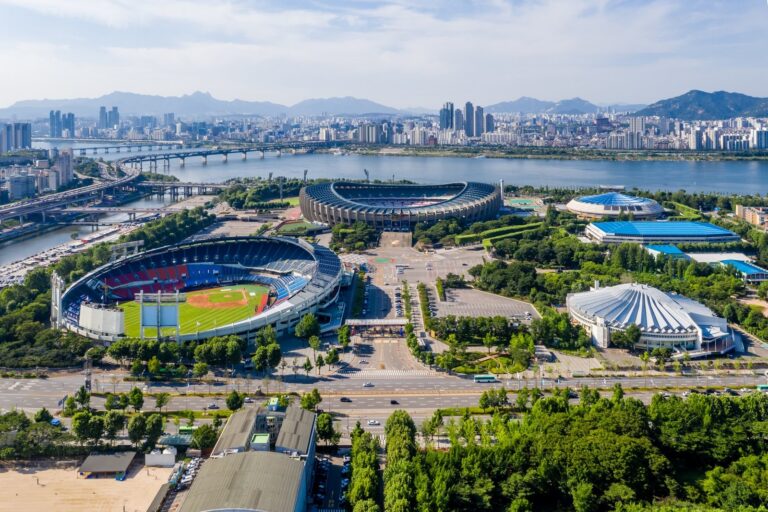
Seoul Arena is scheduled to open in June 2027.
Sources
- Riot Splits 2027 Worlds With Japan as Korean Bid Puts Venue Costs on Cities
- Riot Games
- 'Arcane' May Be Over, But Riot Games is Bringing a 'League of Legends' Music Anthology to Netflix
- Worlds 2027 heads to Japan and Korea, MSI goes to Spain and First Stand moves to China
Photo: Seoul Institute (CC BY 4.0)