
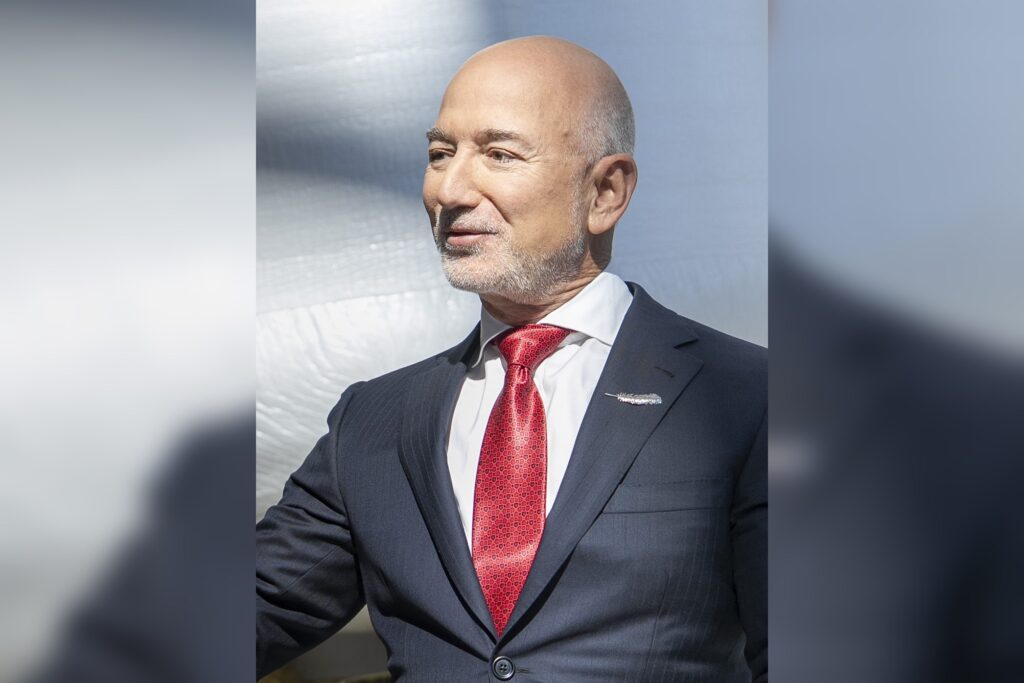
SEATTLE, July 15 — Jeff Bezos, the founder of Amazon and Blue Origin, has spent the better part of three decades building a commercial empire that now spans retail, spaceflight, and journalism. Under the hood, the technical reality of his career is one of engineering precision married to vast capital deployment—a combination that has reshaped multiple industries but also drawn sharp legal and regulatory scrutiny. Bezos founded Amazon in 1994, serving as its chief executive until July 2021, when he transitioned to the role of executive chairman.
His net worth was estimated by Forbes at $180 billion in 2024, a figure that places him among the wealthiest individuals on the planet. The detail that matters here is that Bezos remains involved in strategic decisions at Amazon even after stepping away from day-to-day operations.
In 2000, Bezos founded Blue Origin, the spaceflight company that has become his primary vehicle for competing in the orbital launch market. He has invested $10 billion in Blue Origin, per his 2021 statement. As ever with Bezos, the scale of ambition is matched by the scale of capital—though the technical reality of building reusable rockets has proven slower than some rivals.
The legal landscape around Bezos’s space ambitions has been contentious. In 2021, Blue Origin filed a lawsuit over NASA’s lunar lander contract, a dispute that pitted the company directly against SpaceX, Elon Musk’s launch firm.
That lawsuit was part of a broader pattern of legal clashes between the two companies, reflecting the high stakes of the emerging commercial space sector. ### Project Kuiper and the Satellite Race Bezos announced Project Kuiper in April 2019, with plans for 3,236 satellites in low Earth orbit. The project is designed to compete directly with SpaceX’s Starlink network, offering broadband internet from space. The technical reality of building and launching that many satellites is formidable—requiring manufacturing capacity, launch vehicles, and regulatory approvals that are still being assembled.
The detail that matters is that Blue Origin’s own New Glenn rocket, still in development as of mid-2026, is expected to carry many of those Kuiper satellites to orbit. The interplay between Bezos’s two major ventures—Amazon for the satellite network, Blue Origin for the launch vehicles—represents a vertical integration strategy that few other companies can match. ### Media and Education Bezos purchased The Washington Post in 2013 for $250 million, taking personal ownership of the newspaper rather than folding it into Amazon’s corporate structure.
The acquisition gave Bezos a significant voice in American journalism, though he has largely left the Post’s editorial operations to its professional staff. Bezos holds a bachelor’s degree in electrical engineering and computer science from Princeton University, a credential that undergirds the technical precision he has brought to Amazon’s logistics systems and Blue Origin’s engineering culture.
The wry observation here is that Bezos, the engineer, has built his fortune not on a single invention but on the systematic application of engineering discipline to retail, cloud computing, and now spaceflight. ### What to Watch Next The key question for Bezos’s future is whether Blue Origin can deliver on its promises—particularly the New Glenn rocket and the Project Kuiper satellite constellation—before competitors consolidate their advantages.
The legal disputes with SpaceX are unlikely to resolve the underlying technical competition; that will be settled on launch pads and in orbital slots. Bezos turned 62 in January 2026.
His wealth, his strategic role at Amazon, and his ownership of The Washington Post give him a platform that few business figures have ever commanded. The detail that matters, as ever, is execution: the technical reality of building and launching 3,236 satellites, of competing with SpaceX, and of maintaining Amazon’s dominance in retail and cloud computing. Those are the metrics by which his second act will be judged.




