
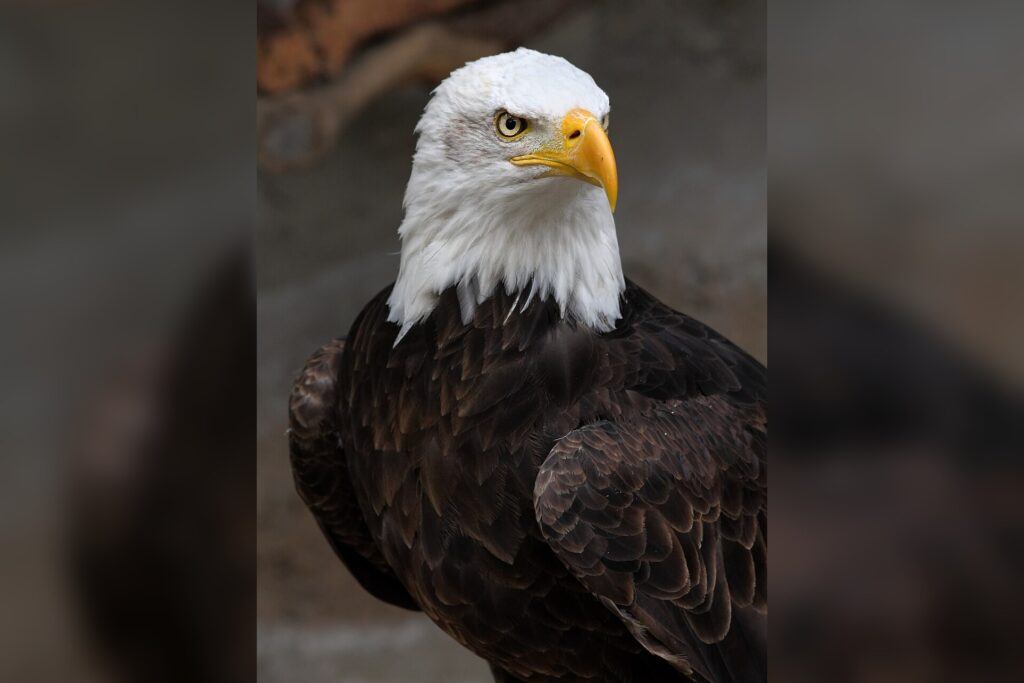
Wildlife officials and conservation groups now face a practical question: which rivers, lakes and coastlines will host the nation’s bald eagles this winter? The answer, emerging from years of GPS tracking data, has reshaped how biologists think about protecting the species. It is not about preserving a single warm-weather refuge.
It is about maintaining a network of feeding sites spread across the continent. The birds do not flee cold.
They flee empty water. When lakes freeze solid, fish vanish beneath the ice. Eagles cannot dive through it.
So they move — sometimes fifty miles, sometimes five hundred — to whatever patch of open water still holds a meal. A reservoir that stays ice-free because of a power plant’s warm-water discharge can draw hundreds of birds.
A river running fast enough to avoid freezing becomes a winter grocery store. This changes the conservation math. Protecting a nesting site in Minnesota does little good if the birds winter in Missouri and the Missouri River is developed for housing.
The U.S. Fish and Wildlife Service has already begun mapping what biologists call “food corridors” — the routes eagles follow between summer territories and winter feeding grounds. Those maps are not finished. They rely on data from transmitter-equipped birds, and the sample size remains limited.
State agencies are watching closely. In the Upper Midwest, where eagle populations have rebounded dramatically since the DDT ban, winter congregations can exceed a thousand birds at a single reservoir.
Local officials need to know which sites will flood with eagles before they approve shoreline construction or recreational boating permits. The tracking data gives them that lead time — but only if the data keeps flowing. Funding is the next bottleneck.
The transmitters cost about $3,500 each. Battery life runs roughly three years.
Researchers at the U.S. Geological Survey and several universities have been swapping units onto new birds as old ones fail, but the program has no dedicated federal line item. It survives on competitive grants and soft money. A single budget cut could silence the transmitters.
Private citizens are stepping in. Birdwatching clubs in states like Iowa, Nebraska and Montana have raised money to purchase transmitters for local research projects. The Audubon Society’s Christmas Bird Count, which runs from December 14 through January 5 this year, will collect ground-level data on where eagles are actually seen — a crowdsourced check on the satellite data.
Anyone with binoculars and a smartphone can contribute. The human dimension is harder to quantify.
Families who watch eagles from their back decks in October often find the birds gone by January. That absence feels personal. Conservation groups are now producing simple maps showing where “their” eagles likely went — not to satisfy scientific curiosity, but to keep people invested in protection.
If you know your local pair is wintering at a reservoir 200 miles south, you might care about that reservoir’s water quality. No single policy fix applies.
Some eagles stay put year-round. Others roam. The only constant is that they follow fish.
Wildlife managers are now shifting from the old model — protect the nest, protect the bird — to a broader one: protect the food web. That means keeping rivers free-flowing, regulating water temperatures where possible, and limiting disturbance at known winter roosts. The next five years will tell whether that approach works at scale.
{“@context”: “https://schema.org”, “@type”: “NewsArticle”, “headline”: “GPS Data Shows Bald Eagles Follow Food Sources, Not Warmth, in Winter”, “description”: “Wildlife officials and conservation groups now face a practical question: which rivers, lakes and coastlines will host the nation’s bald eagles this winter? The answer,…”, “datePublished”: “2026-07-05T12:01:00+00:00T09:30:00+00:00”, “author”: {“@type”: “Person”, “name”: “Sebastian Smith”}, “publisher”: {“@type”: “Organization”, “name”: “InfoPulse Today”, “url”: “https://newsfeed.2bme.xyz/”}}




