
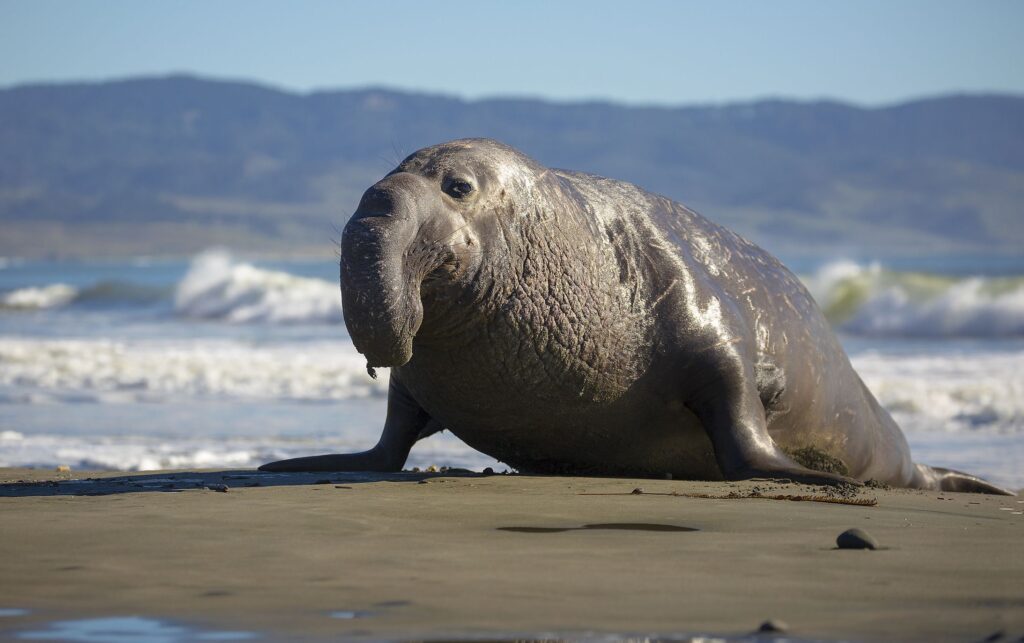
One seal. One thousand kilograms. One point four million TikTok followers.
The numbers tell a story that Tasmania’s wildlife officials wish were different. Neil the elephant seal is back on Australian soil.
He is 5 years old. He has visited the southern Tasmanian coast 12 times since his birth. His latest June arrival turned into a spectacle that pits viral fame against public safety.
The damage is specific. Bent traffic bollards.
A sign warning people about seals — Neil knocked that one over. A fence that tried to stop him. It failed.
He picks fights with parked cars. He smashes barriers meant to keep him off roads. Then he lies down, sometimes in the middle of a street, and traffic stops.
Tasmania’s human population is roughly 570,000. Neil’s online following is more than double that.
That gap is the problem. Sophia Volzke studies elephant seals in the region. She said Neil’s behavior is normal for a juvenile male.
They practice for adulthood, when males rear up and crash chests together in dominance battles. Neil is not being a rebel.
He is being a seal. But a normal seal with abnormal fame creates a dangerous mix. Officials worry that fans will get too close.
A 1,000-kilogram animal with a bellowing roar is not a pet. He is a wild animal. The warning is blunt: ill-advised human-seal encounters hurt both sides.
Neil is the only male elephant seal to visit Tasmania in years. That rarity feeds his legend.
Online, some celebrate him as an anti-authoritarian hero. The experts see something else: a growing animal doing what growing animals do, but doing it under the gaze of 1.4 million people. The math is straightforward.
One seal. One region.
One million four hundred thousand eyes watching. That many eyes mean that many chances for someone to make a mistake. A selfie.
A closer look. A hand reaching out. Against a creature that size, there is no quick escape.
Neil has been feeding at sea for months. He hauled ashore in June, heavy and full of the energy that comes with youth.
His rampage through local infrastructure is not malice. It is exploration. Juvenile male elephant seals need to test things.
They need to push. They need to practice.
The problem is that Neil practices on traffic signs and parked cars, and the whole world watches. Tasmania’s beachside towns have learned to wince when Neil arrives. Social media cheers.
Officials brace. The fence that did not survive his vault attempt is replaced. The bollards get straightened.
The signs go back up. And Neil lies placidly wherever he likes.
Twelve visits. Five years old. One thousand kilograms.
One point four million followers. Those are the numbers that matter.
They add up to a single warning: keep your distance. The seal does not know he is famous. He only knows he is a seal.
{“@context”: “https://schema.org”, “@type”: “NewsArticle”, “headline”: “Tasmania’s Neil the seal draws crowds, causing damage and safety risks”, “description”: “One seal. One thousand kilograms. One point four million TikTok followers. The numbers tell a story that Tasmania’s wildlife officials wish were different. Neil the…”, “datePublished”: “2026-07-03T06:13:22+00:00T09:30:00+00:00”, “author”: {“@type”: “Person”, “name”: “Arjun Mehta”}, “publisher”: {“@type”: “Organization”, “name”: “InfoPulse Today”, “url”: “https://newsfeed.2bme.xyz/”}}




